Namal College: another feather in Imran Khan’s cap!
The News, April 28, 2008
By Mumtaz Alvi
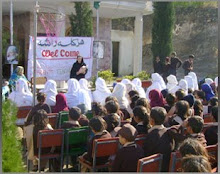
ISLAMABAD: The prime minister, along with the chairman of the Pakistan Tehrik-e-Insaf, launched the quality Namal College in Mianwali on April 27.
The college is the brainchild of Imran Khan, who was appalled at the high level of unemployment among the youth of Mianwali. Therefore, in order to provide high quality training and employable skills, so that the youth of the district could earn a decent living, he wanted to open a college.
A large number of people gathered on Sunday for the inauguration of the college, including government ministers, educationists, and donors alongside the people of Mianwali, who have so generously donated the land on which the college has been built.
Imran's vision is to create a world-class research university and knowledge city where scholars can work and study in an Oxford-like academic environment. "This is the most beautiful location,” said Imran referring to the surroundings, "and exactly the right kind of environment to set up a centre of excellence. In a few years’ time, academics will work and live here."
Working alongside Imran for the last two years has been the University of Bradford, one of the leading universities in the UK, especially in engineering and management courses. The university has been ranked No 1 for graduate employment in the north of England in The Times League tables for the last five years and has a history of developing and delivering high quality and demand-driven degree programmes as well as an excellent reputation for research.
In December 2005, Imran was appointed the university's first international chancellor, succeeding four previous chancellors, the first of whom was Harold Wilson, Labour Prime Minister of Britain.
The University of Bradford has granted 'Associate College' status to Namal College. Commenting on the importance of the partnership with the Namal College, Vice Chancellor of the University of Bradford Mark Cleary said, "The university does not award Associate College status lightly. In our 42-year history since we were granted our Royal Charter, we have given this status to only eight Associate Colleges in the United Kingdom and only three around the world. We were, however, inspired by the vision and values for Namal College, which we felt were very similar to our own and to the commitment for excellence, exemplified by Shaukat Khanum Memorial Hospital, also a partner of the university, which we know will be demonstrated here at Namal College too."
The Bradford University will be involved in designing the courses and curriculum, in ensuring quality assurance mechanism and training and development for the faculty. Courses will be delivered in 4 phases. The Phase I will offer certificate courses, Phase II diploma courses, Phase III degree course and Phase IV research degrees.
The initial curriculum will be focused in the following areas: Construction (masons, carpenters, electricians), automotive engineering, electrical engineering with emphasis on appliances repairs; agricultural equipment engineering, development and maintenance, and cement industry work.
Majority of the students at the university will be on scholarships and come from areas where they would not have had the opportunities that the Namal College would offer. The Namal College will be of enormous benefit not only to the Mianwali district but also the whole of Pakistan. Over the long term, Namal College's "Knowledge City" will act as a best practice model for other regions of Pakistan to extend its benefits nationally, like the Shaukat Khanum is doing today.
Wednesday, April 30, 2008


Thursday, April 24, 2008
Independent MPAs in Pakhtunkhwa assembly.
MPAs in NWFP play their cards well
Friday, April 25, 2008
Nine districts have no representation in NWFP cabinet
By Khalid Kheshgi
PESHAWAR: Six independently-elected MPAs have won places in the 26-member NWFP cabinet after joining the ruling parties while another switched sides to become a provincial minister.
On the other hand, nine districts of the Frontier province have no representation in the coalition government led by the Awami National Party (ANP) and the Pakistan People's Party (PPP) whereas some districts are blessed with more than one ministry.
The Mansehra district, which has six provincial assembly constituencies, has got four ministries while Nowshera, having five seats, will have three ministers in the provincial cabinet. Abbottabad, Kohistan, Battgram, Dera Ismail Khan, Lakki Marwat, Hangu, Tank, Shangla and Dir Upper districts have no say in the NWFP government despite the fact that the ruling parties have their elected MPAs in some of these districts.
In the 26-member provincial cabinet, the ANP has 15 ministers while the PPP has 11. The ANP has accommodated three independently-elected MPAs and the PPP nominated three independents and one PPP-S MPA from its quota.
According to the power-sharing formula between the two major allies, 21 ministers were inducted into the cabinet on April 2 while five others were administered oath on April 23 in the second phase. The PML-N, one of the coalition partners at the Centre, will nominate three ministers in the existing cabinet if it agrees to join the NWFP government.
Mian Nisar Gul Kakakhel from Karak, Amjad Afridi from Kohat and Qazi Asad from Haripur, who were elected as independents in the February 18 elections, had joined the ANP and eventually got the ministerial slots. Two independents, Akhtar Nawaz Khan from Haripur and Maulvi Obaidullah from Kohistan, joined the ANP while Malik Hayat from Dir Upper, Adnan Khan Wazir from Bannu and Khalifa Abdul Qayyum from Dera Ismail Khan extended their support to the ANP, which had 31 MPAs elected on its ticket to the NWFP Assembly.
Muhammad Shuja Khan from Mansehra, Sher Azam Khan from Bannu, Habib-ur-Rehman Tanoli from Mansehra and Pervez Khattak from Nowshera made it to the NWFP cabinet on the PPP quota, which had 17 MPAs elected on its ticket to the provincial assembly.
Baseer Ahmed Khan from Nowshera, Mehmood Alam from Kohistan and Anwar Saifullah Khan, who were elected from two provincial assembly constituencies from Lakki Marwat, joined the PPP soon after the February 18 polls.
Habib-ur-Rehman, who is also the central deputy general secretary of the PPP-S, represents the six-member independent group, comprising Syed Murid Kazim, Sardar Ali, Javid Tarakai, Fazlullah and Syed Qalb-e-Hasan.
The ANP and PPP have the strength of 46 and 29 MPAs, respectively, while the JUI-F has 14 lawmakers, the PML-N eight MPAs and the PML-Q has six parliamentarians in the 117-seat house. By-elections on seven NWFP Assembly seats are to be held on June 18 in Dir Upper, Swat, Charsadda, Lakki Marwat, Abbottabad and Battagram districts.
Friday, April 25, 2008
Nine districts have no representation in NWFP cabinet
By Khalid Kheshgi
PESHAWAR: Six independently-elected MPAs have won places in the 26-member NWFP cabinet after joining the ruling parties while another switched sides to become a provincial minister.
On the other hand, nine districts of the Frontier province have no representation in the coalition government led by the Awami National Party (ANP) and the Pakistan People's Party (PPP) whereas some districts are blessed with more than one ministry.
The Mansehra district, which has six provincial assembly constituencies, has got four ministries while Nowshera, having five seats, will have three ministers in the provincial cabinet. Abbottabad, Kohistan, Battgram, Dera Ismail Khan, Lakki Marwat, Hangu, Tank, Shangla and Dir Upper districts have no say in the NWFP government despite the fact that the ruling parties have their elected MPAs in some of these districts.
In the 26-member provincial cabinet, the ANP has 15 ministers while the PPP has 11. The ANP has accommodated three independently-elected MPAs and the PPP nominated three independents and one PPP-S MPA from its quota.
According to the power-sharing formula between the two major allies, 21 ministers were inducted into the cabinet on April 2 while five others were administered oath on April 23 in the second phase. The PML-N, one of the coalition partners at the Centre, will nominate three ministers in the existing cabinet if it agrees to join the NWFP government.
Mian Nisar Gul Kakakhel from Karak, Amjad Afridi from Kohat and Qazi Asad from Haripur, who were elected as independents in the February 18 elections, had joined the ANP and eventually got the ministerial slots. Two independents, Akhtar Nawaz Khan from Haripur and Maulvi Obaidullah from Kohistan, joined the ANP while Malik Hayat from Dir Upper, Adnan Khan Wazir from Bannu and Khalifa Abdul Qayyum from Dera Ismail Khan extended their support to the ANP, which had 31 MPAs elected on its ticket to the NWFP Assembly.
Muhammad Shuja Khan from Mansehra, Sher Azam Khan from Bannu, Habib-ur-Rehman Tanoli from Mansehra and Pervez Khattak from Nowshera made it to the NWFP cabinet on the PPP quota, which had 17 MPAs elected on its ticket to the provincial assembly.
Baseer Ahmed Khan from Nowshera, Mehmood Alam from Kohistan and Anwar Saifullah Khan, who were elected from two provincial assembly constituencies from Lakki Marwat, joined the PPP soon after the February 18 polls.
Habib-ur-Rehman, who is also the central deputy general secretary of the PPP-S, represents the six-member independent group, comprising Syed Murid Kazim, Sardar Ali, Javid Tarakai, Fazlullah and Syed Qalb-e-Hasan.
The ANP and PPP have the strength of 46 and 29 MPAs, respectively, while the JUI-F has 14 lawmakers, the PML-N eight MPAs and the PML-Q has six parliamentarians in the 117-seat house. By-elections on seven NWFP Assembly seats are to be held on June 18 in Dir Upper, Swat, Charsadda, Lakki Marwat, Abbottabad and Battagram districts.
Peace Accord With Mehsuds
Peace accord finalised with Mehsuds
By Ismail Khan, Dawn, April 23, 2008
PESHAWAR, April 22: The government is close to an agreement with warring Mehsuds that seeks an end to militant activity, exchange of prisoners and gradual withdrawal of the military to restore peace to the volatile South Waziristan tribal region.
The 15-point draft agreement, seen by Dawn, has been thoroughly discussed and approved at the senior political leadership level in Islamabad and also enjoys the backing of the military establishment.
The interlocutors were given a final go-ahead following a meeting of top leaders of PPP, PML-N and ANP in Islamabad on April 15. The ANP chief, Asfandyar Wali Khan, briefed his coalition partners on the subject and obtained their consent, sources said.
The matter has been thoroughly debated within the military establishment as well as the political leadership and a broad consensus has been achieved, according to knowledgeable sources.
One source said that Chief of Army Staff Gen Ashfaq Parvez Kayani, during a briefing on April 2, clearly told Prime Minister Syed Yusuf Raza Gilani and heads of the ruling coalition parties that the military would take its cue from the political leadership on matters relating to internal security, including peace talks with militants and any military action.
According to the draft document, the peace agreement would be signed between the political administrator of South Waziristan, as representative of the government of Pakistan, and tribal elders as representatives of the Mehsud tribes in South Waziristan.
The draft agreement requires the Mehsud tribes to give an undertaking that government and security forces would not be targeted at all; their equipment and property would not be damaged; no military or government functionary would be kidnapped; all roads would be opened to the Frontier Corps in accordance with the old procedure and there would be no restriction on their movement.
Mehsud tribes would also be required to ensure that no terrorist activity takes place anywhere in Pakistan, including the tribal regions nor would they assist anyone in such an activity.
The Mehsuds would not use their soil for any anti-state activity nor would they allow anyone to do so, the draft agreement reads.
Mehsuds would also furnish an undertaking not to create any parallel administration; respect writ of the state; contact the political administration for resolution of their problems while the administration would decide matters in accordance with local 'riwaj' (customs) and the Frontier Crimes Regulation with the cooperation of local elders.
The draft agreement requires Mehsud tribes to expel all foreign militants from their territory and undertake not to give them shelter in future.
The document says that the expulsion of foreign militants would begin within one month of the signing of the agreement, but a month's extension could be granted if there are unavoidable reasons.
It also requires the Mehsuds to give an undertaking that they would assist the government and not create any hurdle in matters relating to the government and developmental schemes.
They would also hold responsibility for the protection of locals as well as foreign contractors working on developmental projects in the area.
According to the draft agreement, the political administration would work through the tribe concerned for verification and subsequent action if it comes to know about any militant training camp, including those involved in suicide bombings.
It gives the government the right to take action in accordance with 'riwaj' and the FCR if the tribe fails to take any action.
The draft agreement provides for exchange of prisoners soon after the signing of the agreement as confidence-building measure. The political administration would release all Mehsud tribesmen held under territorial responsibility clause of the FCR, while militants would release government hostages.
Mehsud tribesmen held without charge would also be released while the fate of those remaining would be discussed and those who could be legally released would be set free.
After the signing of the agreement, regular troops would be withdrawan from the Mehsud territory in a gradual/phased manner.
In case of violation, the political administration would have the right to take action in accordance with 'riwaj' and the FCR.
More significantly, the draft agreement stipulates that it would not be scrapped due to any external or internal pressure.
Sources privy to the behind-the-scene talks said that efforts were being made to replicate the agreement in Bajaur and Mohmand tribal regions and contacts in this regard had already been established.
"The response is very, very positive," these sources said while referring to a statement by a spokesman for the Tehrik-i-Taliban Pakistan, Maulavi Omar.
The TTP spokesman has acknowledged contacts and has said that militants are adhering to a unilateral ceasefire to allow these peace overtures to succeed.
One source however warned against over-optimism, saying it is a complicated and sensitive matter and both sides are proceeding with extreme caution.
"The draft agreement is ready but it is still being fine-tuned. It involves tough bargaining. By no means it's simple and easy."
By Ismail Khan, Dawn, April 23, 2008
PESHAWAR, April 22: The government is close to an agreement with warring Mehsuds that seeks an end to militant activity, exchange of prisoners and gradual withdrawal of the military to restore peace to the volatile South Waziristan tribal region.
The 15-point draft agreement, seen by Dawn, has been thoroughly discussed and approved at the senior political leadership level in Islamabad and also enjoys the backing of the military establishment.
The interlocutors were given a final go-ahead following a meeting of top leaders of PPP, PML-N and ANP in Islamabad on April 15. The ANP chief, Asfandyar Wali Khan, briefed his coalition partners on the subject and obtained their consent, sources said.
The matter has been thoroughly debated within the military establishment as well as the political leadership and a broad consensus has been achieved, according to knowledgeable sources.
One source said that Chief of Army Staff Gen Ashfaq Parvez Kayani, during a briefing on April 2, clearly told Prime Minister Syed Yusuf Raza Gilani and heads of the ruling coalition parties that the military would take its cue from the political leadership on matters relating to internal security, including peace talks with militants and any military action.
According to the draft document, the peace agreement would be signed between the political administrator of South Waziristan, as representative of the government of Pakistan, and tribal elders as representatives of the Mehsud tribes in South Waziristan.
The draft agreement requires the Mehsud tribes to give an undertaking that government and security forces would not be targeted at all; their equipment and property would not be damaged; no military or government functionary would be kidnapped; all roads would be opened to the Frontier Corps in accordance with the old procedure and there would be no restriction on their movement.
Mehsud tribes would also be required to ensure that no terrorist activity takes place anywhere in Pakistan, including the tribal regions nor would they assist anyone in such an activity.
The Mehsuds would not use their soil for any anti-state activity nor would they allow anyone to do so, the draft agreement reads.
Mehsuds would also furnish an undertaking not to create any parallel administration; respect writ of the state; contact the political administration for resolution of their problems while the administration would decide matters in accordance with local 'riwaj' (customs) and the Frontier Crimes Regulation with the cooperation of local elders.
The draft agreement requires Mehsud tribes to expel all foreign militants from their territory and undertake not to give them shelter in future.
The document says that the expulsion of foreign militants would begin within one month of the signing of the agreement, but a month's extension could be granted if there are unavoidable reasons.
It also requires the Mehsuds to give an undertaking that they would assist the government and not create any hurdle in matters relating to the government and developmental schemes.
They would also hold responsibility for the protection of locals as well as foreign contractors working on developmental projects in the area.
According to the draft agreement, the political administration would work through the tribe concerned for verification and subsequent action if it comes to know about any militant training camp, including those involved in suicide bombings.
It gives the government the right to take action in accordance with 'riwaj' and the FCR if the tribe fails to take any action.
The draft agreement provides for exchange of prisoners soon after the signing of the agreement as confidence-building measure. The political administration would release all Mehsud tribesmen held under territorial responsibility clause of the FCR, while militants would release government hostages.
Mehsud tribesmen held without charge would also be released while the fate of those remaining would be discussed and those who could be legally released would be set free.
After the signing of the agreement, regular troops would be withdrawan from the Mehsud territory in a gradual/phased manner.
In case of violation, the political administration would have the right to take action in accordance with 'riwaj' and the FCR.
More significantly, the draft agreement stipulates that it would not be scrapped due to any external or internal pressure.
Sources privy to the behind-the-scene talks said that efforts were being made to replicate the agreement in Bajaur and Mohmand tribal regions and contacts in this regard had already been established.
"The response is very, very positive," these sources said while referring to a statement by a spokesman for the Tehrik-i-Taliban Pakistan, Maulavi Omar.
The TTP spokesman has acknowledged contacts and has said that militants are adhering to a unilateral ceasefire to allow these peace overtures to succeed.
One source however warned against over-optimism, saying it is a complicated and sensitive matter and both sides are proceeding with extreme caution.
"The draft agreement is ready but it is still being fine-tuned. It involves tough bargaining. By no means it's simple and easy."
Education:Do madrassas need revamping?
Do madrassas need revamping?
Are seminaries in Pakistan really breeding violence and hatred, and not imparting education?
By Dr Noman Ahmed; The News, April 20, 2008
In his inaugural speech in Parliament, Prime Minister Yousaf Raza Gillani announced the setting up of a Madrassa Regulatory Authority to oversee the functioning of seminaries across the country. It goes without saying that madrassas have been a hot topic of discussion for about a decade. The previous regime had also undertaken a number of initiatives to reform madrassas, but on the whole these efforts failed to bring about the desired changes. Therefore, it is necessary that the current effort is guided by a full understanding and analysis of the situation.
The image of madrassas has changed drastically over time. Once, they were considered as the ideological flag-bearers of the state. As a 'holy war' against the Soviet Union was to be fuelled by a zealot crop of recruits, all kind of state patronage was extended to madrassas. All that was associated with them was held in high esteem. Components of the establishment, predominantly the armed forces, carved a special niche for madrassas in their operation manuals. After the Soviet retreat in the late 1980s, however, the Western perception changed. Influenced by the West and irked by the misdeeds of the mercenaries disguised as clerics, the Pakistani establishment also took a U-turn in the late 1990s.
As far as the syllabus is concerned, the centuries-old Dars-e-Nizamiya is still taught in most Pakistani madrassas. Demands of reforms, therefore, are being made by different quarters, mainly because this syllabus is outdated and not in line with the contemporary educational needs. The state has also started exerting pressure in a bid to diffuse the potential threat of militarism, thought to be evolving due to obscurantist policies and practices of the past. The clerics, on the other hand, refuse to acknowledge the need for reforms, at least those fostered by the state.
The liberal elements are viewed as the arch-rivals of madrassas in Pakistan. In their pursuit to foster liberal thinking and attitude, they consider madrassas as the harbingers of retrogression and orthodoxy. Madrassas and clerics, in turn, denounce the liberals, terming them promoters of evil. Both the camps refuse to recognise the existence and subsequent validity of each other's school of thought, modus operandi of learning and the overall ideology of life. In comparison, academics and scholars have a mixed approach. Skeptical of the liberals, who demand dissent from the conventions, they mostly mend fences with the clerics and share some wavelength, at least on controversial issues, with them.
The media, especially international outfits, paint a very negative picture of madrassas and their activities. More often than not, madrassas are shown as sites brewing anti-social activities. Brainwashing for suicide bombings, attacks on civilian targets hosting Western interests and other such happenings are all shown with madrassas in the background. The print media, especially the English press, is especially hostile to madrassas. Urdu newspapers, however, are not hostile to madrassas, and provide wide coverage to their activities and outlook. Similarly, feudals and landed aristocracy hold madrassas and clerics in high esteem, as they normally share the common perception of anti-progressivism. On the other hand, women's and human rights groups are suspicious of madrassas and clerics.
In our society, barring a few exceptions, the bright students focus their attention on those disciplines that offer lucrative employment and posh lifestyle. Thus, they adopt the fashionable channels of learning right from the beginning to be prepared for future challenges. On the other hand, madrassas receive the bottom strata of the youth. There are several reasons for this, as elucidated in the following:
One, the parents who cannot afford to raise their children -- let alone bear their educational expenses -- are left with no choice but to send them to madrassas. They, at least, have the consolation that madrassas shall house the child, and provide for his or her food, boarding and lodging. The parents also draw satisfaction from the assumption that because of their child acquiring religious education, the way to Heaven would be opened for them as well as the child.
Two, destitute children and orphans who do not have any relative to look after them normally end up in a madrassa. The whole Taliban syndrome is an exemplification of how a sizable number of these orphans and destitute children joined madrassas as the only choice. According to famous journalist, Ahmed Rashid, the Taliban primarily evolved from the dozens of madrassas established in the refugee camps along the Pak-Afghan border territories. Besides teachings, these children received hands-on training on some of the most lethal weapons in the world. The Taliban, as a result, soon became an invincible force.
Three, urban ultra-orthodox families send their children to madrassas to learn Nazra Quran or for Hifzul Quran. However, since most of these students do not have any other choice or outlet available to them, they become the captive clientelle of madrassas.
Several issues are vital for consideration with respect to madrassas / traditional system of education. The pattern and system is in need of a dire change, at least in response to the sea changes that have occurred in the society in the past several decades. The doctrine that the religious corollaries and axioms are static, and thus do not need a change over, itself requires a review. By taking this stubborn stand, madrassas are likely to lose their very relevance to the society in which they operate. In this rapidly changing world, an impartial assessment of the situation seems to be a pre-requisite for a beginning towards change. Besides, madrassa administrations follow a very introvert pattern of operation. They are reluctant to engage into dialogue and discussion even with other components of the education sector.
By taking this isolationist stand, madrassas seem to be losing the traditional sympathy that the masses in general and middle classes in particular used to have for them. Skill development with particular reference to the prevailing circumstances is non-existent. Former students of madrassas have almost no avenue for gainful employment. Either they opt for becoming prayer leaders (pesh imams) or prayer callers (moazzins); both jobs available in extremely limited numbers. Due to this supply side pressure, more and more mosques are being built -- some often at sites not legally allocated to them. Some of these students start offering tuitions to neighbourhood children of middle- and upper-income groups. But all these choices are temporary, and limited in scale and operation.
There are many ways forward: the ulema / madrassa administrators need to analyse the prevailing circumstances in an impartial and honest manner. The harsh realities of both the local society and global environment must be understood to equate the potentials and threats. Unless this is done, very little improvement can be expected. The clerics need to open up to the outside world, so that people can freely access their viewpoints and vice-versa. They need to see the important realities of life as they stand today and put their acts together accordingly.
Are seminaries in Pakistan really breeding violence and hatred, and not imparting education?
By Dr Noman Ahmed; The News, April 20, 2008
In his inaugural speech in Parliament, Prime Minister Yousaf Raza Gillani announced the setting up of a Madrassa Regulatory Authority to oversee the functioning of seminaries across the country. It goes without saying that madrassas have been a hot topic of discussion for about a decade. The previous regime had also undertaken a number of initiatives to reform madrassas, but on the whole these efforts failed to bring about the desired changes. Therefore, it is necessary that the current effort is guided by a full understanding and analysis of the situation.
The image of madrassas has changed drastically over time. Once, they were considered as the ideological flag-bearers of the state. As a 'holy war' against the Soviet Union was to be fuelled by a zealot crop of recruits, all kind of state patronage was extended to madrassas. All that was associated with them was held in high esteem. Components of the establishment, predominantly the armed forces, carved a special niche for madrassas in their operation manuals. After the Soviet retreat in the late 1980s, however, the Western perception changed. Influenced by the West and irked by the misdeeds of the mercenaries disguised as clerics, the Pakistani establishment also took a U-turn in the late 1990s.
As far as the syllabus is concerned, the centuries-old Dars-e-Nizamiya is still taught in most Pakistani madrassas. Demands of reforms, therefore, are being made by different quarters, mainly because this syllabus is outdated and not in line with the contemporary educational needs. The state has also started exerting pressure in a bid to diffuse the potential threat of militarism, thought to be evolving due to obscurantist policies and practices of the past. The clerics, on the other hand, refuse to acknowledge the need for reforms, at least those fostered by the state.
The liberal elements are viewed as the arch-rivals of madrassas in Pakistan. In their pursuit to foster liberal thinking and attitude, they consider madrassas as the harbingers of retrogression and orthodoxy. Madrassas and clerics, in turn, denounce the liberals, terming them promoters of evil. Both the camps refuse to recognise the existence and subsequent validity of each other's school of thought, modus operandi of learning and the overall ideology of life. In comparison, academics and scholars have a mixed approach. Skeptical of the liberals, who demand dissent from the conventions, they mostly mend fences with the clerics and share some wavelength, at least on controversial issues, with them.
The media, especially international outfits, paint a very negative picture of madrassas and their activities. More often than not, madrassas are shown as sites brewing anti-social activities. Brainwashing for suicide bombings, attacks on civilian targets hosting Western interests and other such happenings are all shown with madrassas in the background. The print media, especially the English press, is especially hostile to madrassas. Urdu newspapers, however, are not hostile to madrassas, and provide wide coverage to their activities and outlook. Similarly, feudals and landed aristocracy hold madrassas and clerics in high esteem, as they normally share the common perception of anti-progressivism. On the other hand, women's and human rights groups are suspicious of madrassas and clerics.
In our society, barring a few exceptions, the bright students focus their attention on those disciplines that offer lucrative employment and posh lifestyle. Thus, they adopt the fashionable channels of learning right from the beginning to be prepared for future challenges. On the other hand, madrassas receive the bottom strata of the youth. There are several reasons for this, as elucidated in the following:
One, the parents who cannot afford to raise their children -- let alone bear their educational expenses -- are left with no choice but to send them to madrassas. They, at least, have the consolation that madrassas shall house the child, and provide for his or her food, boarding and lodging. The parents also draw satisfaction from the assumption that because of their child acquiring religious education, the way to Heaven would be opened for them as well as the child.
Two, destitute children and orphans who do not have any relative to look after them normally end up in a madrassa. The whole Taliban syndrome is an exemplification of how a sizable number of these orphans and destitute children joined madrassas as the only choice. According to famous journalist, Ahmed Rashid, the Taliban primarily evolved from the dozens of madrassas established in the refugee camps along the Pak-Afghan border territories. Besides teachings, these children received hands-on training on some of the most lethal weapons in the world. The Taliban, as a result, soon became an invincible force.
Three, urban ultra-orthodox families send their children to madrassas to learn Nazra Quran or for Hifzul Quran. However, since most of these students do not have any other choice or outlet available to them, they become the captive clientelle of madrassas.
Several issues are vital for consideration with respect to madrassas / traditional system of education. The pattern and system is in need of a dire change, at least in response to the sea changes that have occurred in the society in the past several decades. The doctrine that the religious corollaries and axioms are static, and thus do not need a change over, itself requires a review. By taking this stubborn stand, madrassas are likely to lose their very relevance to the society in which they operate. In this rapidly changing world, an impartial assessment of the situation seems to be a pre-requisite for a beginning towards change. Besides, madrassa administrations follow a very introvert pattern of operation. They are reluctant to engage into dialogue and discussion even with other components of the education sector.
By taking this isolationist stand, madrassas seem to be losing the traditional sympathy that the masses in general and middle classes in particular used to have for them. Skill development with particular reference to the prevailing circumstances is non-existent. Former students of madrassas have almost no avenue for gainful employment. Either they opt for becoming prayer leaders (pesh imams) or prayer callers (moazzins); both jobs available in extremely limited numbers. Due to this supply side pressure, more and more mosques are being built -- some often at sites not legally allocated to them. Some of these students start offering tuitions to neighbourhood children of middle- and upper-income groups. But all these choices are temporary, and limited in scale and operation.
There are many ways forward: the ulema / madrassa administrators need to analyse the prevailing circumstances in an impartial and honest manner. The harsh realities of both the local society and global environment must be understood to equate the potentials and threats. Unless this is done, very little improvement can be expected. The clerics need to open up to the outside world, so that people can freely access their viewpoints and vice-versa. They need to see the important realities of life as they stand today and put their acts together accordingly.
Tuesday, April 22, 2008

Thursday, February 28, 2008

Thursday, February 14, 2008
PPP, ANP dominate election scene in Frontier

Awami National Party women at a luncheon arranged for the journalists at a local hotel in Peshawar on Wednesday.
(Thanx to zahid of Khyberwatch.com for Picture and News)
PPP, ANP dominate election scene in Frontier
Thursday, February 14, 2008
By Javed Aziz Khan
PESHAWAR: With just four days left in the February 18 general elections, the Awami National Party (ANP) and the Pakistan People's Party (PPP) seem to dominate the election scene in the provincial metropolis.
Though all the political parties have fielded their candidates, a tough contest is expected between the PPP and the ANP, with a slight edge to the latter, on the four National Assembly and 11 provincial assembly seats from Peshawar.
The Muttahida Majlis-e-Amal (MMA), which had swept the last general elections by winning all the four National Assembly and seven provincial assembly seats, seems far behind the ANP and PPP this time. Hardly a few aspirants fielded by the Jamiat Ulema-e-Islam (JUI-F), which is using the name of MMA, may enter the assemblies from the district in the coming polls.
The ANP's central senior vice president and former federal minister, Ghulam Ahmad Bilour, will face PPP provincial secretary information, Ayub Shah, and the JUI-F NWFP spokesperson, Abdul Jalil Jan, on NA-1, Peshawar 1, comprising urban Peshawar. A total of eleven candidates are contesting from the area.
A number of independent aspirants and candidates of different political parties are also in the run for NA-1, but the real competition seems to be between the ANP and the PPP, with an edge to the nationalists. The NA-2 Peshawar, the permanent seat of former chief minister Arbab Jehangir Khalil, is the constituency where millions have been spent on advertising hoardings alone. It seems like a 'modeling contest' between candidates of political parties, who can be seen in different poses on huge billboards to attract voters.
The nationalists have fielded wealthy Arbab Najeebullah against PPP's Arbab Alamgir Khalil. Alamgir is the eldest son of Arbab Jehangir, who while contesting from the constituency never lost a general election throughout his life. Arbab Najeeb seems to be a real challenge to the budding politician, Alamgir, who lost the previous elections to MMA candidate, Maulana Rahmatullah.
Political pundits believe the NA-2 is the only constituency where PPP has an edge over ANP and the factor is the family of Arbab Jehangir, which had made tremendous efforts for the development of the area since its first entry into the assembly in the 70s. The MMA's candidate and six others fielded by different parties are far behind Alamgir and Najeeb.
Apart from Hashim Baber of ANP and Noor Alam Khan of PPP, the secretary general of Pakistan Muslim League-Nawaz, Iqbal Zafar Jhagra, is among the eight candidates flexing muscles for NA-3, Peshawar-III. This is probably the only constituency where the PML-N is flying high. The party factor, however, may prove a real hurdle for popular Jhagra to become an MNA.
PML-Q led by Chaudhry Shujaat Hussain is very much in the run for the backward NA-4 where the party has fielded its provincial chief and former federal minister Amir Muqam against Arbab Zahir of ANP, Azam Afridi of PPP and Barrister Maulana Nisar of JUI-F. Four other candidates are also in the run from the constituency. The well-educated Maulana does not seem to have impressed a large number of voters.
MMA leader Sabir Hussain Awan was elected MNA from the ANP dominated NA-4 in the previous elections. This time Sabir Hussain is not in the run but ANP, which is otherwise ahead in the race, is facing a serious threat in shape of Amir Muqam.
http://www.thenews.com.pk/daily_detail.asp?id=96342
Also see
Wednesday, February 13, 2008
Editorial: Why is the ANP under attack?
"The Daily Times"Editorial: Why is the ANP under attack?
A suicide-bomber blew himself up at an Awami National Party (ANP) gathering east of Miranshah in Northern Waziristan. The blast killed eight people while Nisar Ali Khan, ANP candidate for NA-40 Miranshah, was mildly injured. The suicide used a car-bomb but there are other reports saying it was a not a car-bomb; however, whatever way it was done, it carried the signature of suicide-bombing. The dead included the local president and a leader of ANP. Four days ago, last Saturday, an ANP rally was bombed in Charsadda in the NWFP, killing over 30.
The ANP leadership’s reaction to the Charsadda bombing was, first, that it was not a suicide-bombing attack, and, second, that the party was defending the cause of the Pushtuns and was opposed to the NATO presence in Afghanistan. The leaders in fact expressed anger that a remote-controlled bomb fixed under the platform of the meeting was being called an act of suicide-bombing by the media. But after Monday’s suicide-bombing in North Waziristan, the reaction came from the ANP NWFP president, Mr Afrasiab Khattak, who said that “the government was responsible for such acts of terrorism, as it had failed to provide security to the people”.
The ANP is facing what all the political parties are confronted with in the country. Because of the almost absent writ of the state, they are exposed to threats against which they can’t defend themselves. Since the attacker wants to remain incognito the politicians are loath to name him lest the attacks redouble and the voters stay away from the polls out of fright. Tragically that applies to the media too. One newspaper in Peshawar has received a threat call asking it to “improve” its reporting if it didn’t want to be bombed. The irony is that media-men are compelled to cultivate the habit of assigning moral superiority to the attacker while calling in question the reliability of the state.
There are other “qualifications” that one must have if one wants to avoid being targeted. The first “qualification” is also desired by the voters in the NWFP and wherever the Pushtuns are living, and that is a clearly expressed hatred of America. The second qualification for safety is adherence to the new radical Islamic creed and a clearly expressed opposition to secularism. The third qualification is rejection of the elections 2008. The ANP qualified nicely on the basis of its long-standing opposition to American imperialism, but it failed on second and third qualifications. But the truth it has to accept is that it is faced with the same danger as those who have assented to participate in the elections. Its secularism and acceptance of transition via elections rather than confrontation via a boycott is clearly a political liability.
The rejectionist sentiment is widespread in the regions where the Pushtuns are located in the country although in Balochistan the Baloch nationalists are also a part of this consensus. According to one survey, reported Monday on a TV channel, Imran Khan is the most popular leader in the NWFP and the Tribal Areas. He qualifies because he is anti-American and anti-elections. Whether we like it or not, this does not translate as an even playing field for the rejectionists and the participants, the former having a clear advantage over the latter. The risk involved is loss of one’s life and those of the party supporters with collateral damage added every time.
Where is the state in all this? After a lot of hue and cry about there being a “Taliban Shura” in Quetta, the government decided to act against Mansour Dadullah, a commander of the Afghan Taliban as he was crossing over to Pakistan — at least that is how it has been portrayed — and captured him in a wounded condition. Mansour had recently succeeded his brother, Taliban field commander Mullah Dadullah, who was killed in a May 2007 airstrike in Afghanistan. Mullah Dadullah was the exponent of the culture of beheadings which the Taliban leader Mullah Umar now pretends to dislike.
The same day the other side retaliated in Khyber by kidnapping the Pakistani ambassador to Afghanistan Mr Tariq Azizuddin who was thoughtlessly travelling to his post from Peshawar without the provision of an armed escort which is a necessary requirement for senior government officials while travelling through the Tribal Areas. Mr Azizuddin was perhaps a victim of the widespread faith in the altruism of the terrorists who are said to be “sincerely supporting the cause against America” while the state of Pakistan has “sold out to Bush”. He may now have to be exchanged for Mansour Dadullah.
The ANP has the cleanest credentials among the parties in contention in Pakistan. Its support has increased because of its conduct in the past eight years. It aims to unite the Pushtuns under a cultural banner that was once given by its founder Abdul Ghaffar Khan when it was called NAP. In a country greatly in need of human rights and regional autonomy, the ANP is a strength we should count upon. It is tragic that the state is not able to defend it and terrorism goes unchecked in the country. *"
A suicide-bomber blew himself up at an Awami National Party (ANP) gathering east of Miranshah in Northern Waziristan. The blast killed eight people while Nisar Ali Khan, ANP candidate for NA-40 Miranshah, was mildly injured. The suicide used a car-bomb but there are other reports saying it was a not a car-bomb; however, whatever way it was done, it carried the signature of suicide-bombing. The dead included the local president and a leader of ANP. Four days ago, last Saturday, an ANP rally was bombed in Charsadda in the NWFP, killing over 30.
The ANP leadership’s reaction to the Charsadda bombing was, first, that it was not a suicide-bombing attack, and, second, that the party was defending the cause of the Pushtuns and was opposed to the NATO presence in Afghanistan. The leaders in fact expressed anger that a remote-controlled bomb fixed under the platform of the meeting was being called an act of suicide-bombing by the media. But after Monday’s suicide-bombing in North Waziristan, the reaction came from the ANP NWFP president, Mr Afrasiab Khattak, who said that “the government was responsible for such acts of terrorism, as it had failed to provide security to the people”.
The ANP is facing what all the political parties are confronted with in the country. Because of the almost absent writ of the state, they are exposed to threats against which they can’t defend themselves. Since the attacker wants to remain incognito the politicians are loath to name him lest the attacks redouble and the voters stay away from the polls out of fright. Tragically that applies to the media too. One newspaper in Peshawar has received a threat call asking it to “improve” its reporting if it didn’t want to be bombed. The irony is that media-men are compelled to cultivate the habit of assigning moral superiority to the attacker while calling in question the reliability of the state.
There are other “qualifications” that one must have if one wants to avoid being targeted. The first “qualification” is also desired by the voters in the NWFP and wherever the Pushtuns are living, and that is a clearly expressed hatred of America. The second qualification for safety is adherence to the new radical Islamic creed and a clearly expressed opposition to secularism. The third qualification is rejection of the elections 2008. The ANP qualified nicely on the basis of its long-standing opposition to American imperialism, but it failed on second and third qualifications. But the truth it has to accept is that it is faced with the same danger as those who have assented to participate in the elections. Its secularism and acceptance of transition via elections rather than confrontation via a boycott is clearly a political liability.
The rejectionist sentiment is widespread in the regions where the Pushtuns are located in the country although in Balochistan the Baloch nationalists are also a part of this consensus. According to one survey, reported Monday on a TV channel, Imran Khan is the most popular leader in the NWFP and the Tribal Areas. He qualifies because he is anti-American and anti-elections. Whether we like it or not, this does not translate as an even playing field for the rejectionists and the participants, the former having a clear advantage over the latter. The risk involved is loss of one’s life and those of the party supporters with collateral damage added every time.
Where is the state in all this? After a lot of hue and cry about there being a “Taliban Shura” in Quetta, the government decided to act against Mansour Dadullah, a commander of the Afghan Taliban as he was crossing over to Pakistan — at least that is how it has been portrayed — and captured him in a wounded condition. Mansour had recently succeeded his brother, Taliban field commander Mullah Dadullah, who was killed in a May 2007 airstrike in Afghanistan. Mullah Dadullah was the exponent of the culture of beheadings which the Taliban leader Mullah Umar now pretends to dislike.
The same day the other side retaliated in Khyber by kidnapping the Pakistani ambassador to Afghanistan Mr Tariq Azizuddin who was thoughtlessly travelling to his post from Peshawar without the provision of an armed escort which is a necessary requirement for senior government officials while travelling through the Tribal Areas. Mr Azizuddin was perhaps a victim of the widespread faith in the altruism of the terrorists who are said to be “sincerely supporting the cause against America” while the state of Pakistan has “sold out to Bush”. He may now have to be exchanged for Mansour Dadullah.
The ANP has the cleanest credentials among the parties in contention in Pakistan. Its support has increased because of its conduct in the past eight years. It aims to unite the Pushtuns under a cultural banner that was once given by its founder Abdul Ghaffar Khan when it was called NAP. In a country greatly in need of human rights and regional autonomy, the ANP is a strength we should count upon. It is tragic that the state is not able to defend it and terrorism goes unchecked in the country. *"
Tuesday, February 12, 2008
Message Of Asfanyar Wali Khan
د عوامي نېشنل پارټۍ د سرمشر ښاغلي اسفنديارولي خان پېغام!
السلام علېکم و رحمة الله و برکاته،
د فرورۍ په يولسمه نېټه د ګل په ورځ شوې دغه غم لړلې پېښه د ټول پښتون قام د خفګان او زيان وجه ګرځېدلې ده.
زمونږ ملګري حاجي انور شاه، بختيار خان، قلندر خان، خالق خان، اکبر خان، حکم الله او زبيدالله خان ټول د امن د لارې لاروي وو او د دوي مرګ په اصل کښې دغه غم ځپلې سيمه کښې په ټولو امن خوښو بلکې په امن ګوزار دے. دغه شهيدان زمونږ د خاورې او ټولنې د مامونيت دپاره د بلو مشالونو په څېر دي. د دوي وينه به خدائې هيڅ کله هم هسې نۀ تويوي بلکې دغه وينه به کۀ خېر وي ارومرو د امن د لارې سرنامه ليکي.
مونږ له هر لوري د يرغلونو په ولقه کښې يُو او په مونږ دغه يرغلونه نور څوک نۀ کوي بلکې هم هغه قوتونه ئې کوي چې تل ئې د پښتنو سره جنګ پاتې شوے دے.
د غم دغه لحظو کښې زۀ په ذاتي طور تاسو سره ځان، د خپل ګوند ټول غړي او ټول پښتون قام شريک ګڼم او دا دعا کوم چې خدائې پاک دي د دغه شهيدانو د قربانۍ نتيجه کښې ټوله پښتونخوا د امن د سېوري لاندې کړي.
ستاسو ورور
اسفنديار ولي خان
السلام علېکم و رحمة الله و برکاته،
د فرورۍ په يولسمه نېټه د ګل په ورځ شوې دغه غم لړلې پېښه د ټول پښتون قام د خفګان او زيان وجه ګرځېدلې ده.
زمونږ ملګري حاجي انور شاه، بختيار خان، قلندر خان، خالق خان، اکبر خان، حکم الله او زبيدالله خان ټول د امن د لارې لاروي وو او د دوي مرګ په اصل کښې دغه غم ځپلې سيمه کښې په ټولو امن خوښو بلکې په امن ګوزار دے. دغه شهيدان زمونږ د خاورې او ټولنې د مامونيت دپاره د بلو مشالونو په څېر دي. د دوي وينه به خدائې هيڅ کله هم هسې نۀ تويوي بلکې دغه وينه به کۀ خېر وي ارومرو د امن د لارې سرنامه ليکي.
مونږ له هر لوري د يرغلونو په ولقه کښې يُو او په مونږ دغه يرغلونه نور څوک نۀ کوي بلکې هم هغه قوتونه ئې کوي چې تل ئې د پښتنو سره جنګ پاتې شوے دے.
د غم دغه لحظو کښې زۀ په ذاتي طور تاسو سره ځان، د خپل ګوند ټول غړي او ټول پښتون قام شريک ګڼم او دا دعا کوم چې خدائې پاک دي د دغه شهيدانو د قربانۍ نتيجه کښې ټوله پښتونخوا د امن د سېوري لاندې کړي.
ستاسو ورور
اسفنديار ولي خان
Pakhtuns and contemporary Political challenges
Pakhtuns and contemporary Political challenges
--------------------------------------------------------------------------------
Pakhtun nation seems to be trapped between the devil and the deep blue sea.The devil is in the form of state institutions headed by anti-Pakhtun elements namely civil and military establishment and biased institutions.
The deep blue sea is the mob of those traitors of the Pakhtun soil who have been working for all the biased and anti-Pakhtun institutions of Pakistan and are involved along with the oppressed classes in their criminal role of killing their own brothers in the name of religion , working against the interests of their own land due to being so called public servants. They are concentrating all their energies to help the ruling junta suck the blood of their own Pakhtun brothers ,sisters and children.
The religious elements among the clergy have been on the payroll of ISI and other anti-Pakhtun agencies for selling out the lives of innocent youngsters in the name of religion in Pakistan which is so much under the control of oppressors that even the Chief justice is begging for justice.
The current movers and shakers in the higher echelons of power in Pakistan cannot tolerate the very word "Pakhtun" even within the geographical units of Pakistan - hence they have coined absurd names NWFP,FATA,Balochistan for North,Central and South Pukhtunkhwa respectively for the Pakhtun territories in Pakistan.
A commonly proposed solution to the problems of Pakhtuns is adopting reformative approach which means establishing schools,increasing literacy rate,poverty alleviation,capacity building ,striving for peace ,establishing NGO’s,propagating [pro-establishment] religious teaching etc.This approach has flaws as it is based on the followig assumptions.
1) That Pakhtuns enjoy freedom and equal status in Pakistan
2) That the state is taking care of their basic human rights and needs
3) That the non-Pakhtun leaders and parties are there for their rights
4) That the existing system prevalent in Pakistan is right and even “islamic” and has the solution to their problems.
The flaws are becoming evident and proving catastrophic for the political entity and even existence of Pakhtuns with each passing day.
It is suggested therefore that :
a) The only thing Pakhtuns have to strive for is Political autonomy
b) The only way to achieve political autonomy is to impart political consciouness to the masses and mobilise them to fight politically for their freedom against the occupation of oppressor class aka Punjabis and Mahajirs in Pakistan
Pakhtun political parties should therefore :
1) Win the sympathies of Pakhtuns by raising voice for their rights and warn Pakhtun masses from getting entrapped in the clutches of Pakistani troika aka military establishment, civil beaureocracy and religeous theocracy specially those Pakhtuns who are involved in the dirty game of ethnically cleansing the Pakhtun nation.
2) Set a clear target of achieving political autonomy for Pakhtuns
3) Mobilise Pakhtun masses for political struggle to achieve the target
The near future events will form a critical juncture in the political history of Pakhtuns.The change seems to be inevitable due to the continuous military interventions and dictatorial rule to suppress the basic human rights of the poor and oppressed nationalities in Pakistan.
It seems that the near future is going to witness a major geo-political change in south asia.Azad Balochistan, Azad Pakhtunistan ,Greater Punjab and Sindho Desh with Karachi as Jinnah Pur for Mahajirs (or the remaining Pakistan consisting of Punjab and Sindh) are the probable options.
Pakhtuns might initially resist the change due to the sixty years of state indoctrination along with other Pakistanis.However they will be compelled to form a separate state and become part of a politically and economically weak Azad Pukhtunistan sandwitched between powerful neighbours to safeguard US interests.But as the new option might atleast give them the right to live instead of being killed by their so called muslim brothers for some US bucks so they might opt for it.However it will be a challenge for them to demand merger into Afghanistan.
Similarly in case Azad Balochistan is formed it will serve US interests in the Arabian ocean via Gawadar in which case again the Pakhtun nationalist forces will face the challenge of demanding merger of Pakhtun belt (south Pukhunkhwa) of Balochistan into Afghanistan.
The dramatic changes in the political arena of Pakistan shows that the great game –which might turn out to be a blessing in disguise - has already commenced in Pakistan and is going to get expedited with each passing day especially after the proposed 18-Feb 2008 election drama.
__________________
Pukhtoon Khan
http://geocities.com/Pakhtoonworld
--------------------------------------------------------------------------------
Pakhtun nation seems to be trapped between the devil and the deep blue sea.The devil is in the form of state institutions headed by anti-Pakhtun elements namely civil and military establishment and biased institutions.
The deep blue sea is the mob of those traitors of the Pakhtun soil who have been working for all the biased and anti-Pakhtun institutions of Pakistan and are involved along with the oppressed classes in their criminal role of killing their own brothers in the name of religion , working against the interests of their own land due to being so called public servants. They are concentrating all their energies to help the ruling junta suck the blood of their own Pakhtun brothers ,sisters and children.
The religious elements among the clergy have been on the payroll of ISI and other anti-Pakhtun agencies for selling out the lives of innocent youngsters in the name of religion in Pakistan which is so much under the control of oppressors that even the Chief justice is begging for justice.
The current movers and shakers in the higher echelons of power in Pakistan cannot tolerate the very word "Pakhtun" even within the geographical units of Pakistan - hence they have coined absurd names NWFP,FATA,Balochistan for North,Central and South Pukhtunkhwa respectively for the Pakhtun territories in Pakistan.
A commonly proposed solution to the problems of Pakhtuns is adopting reformative approach which means establishing schools,increasing literacy rate,poverty alleviation,capacity building ,striving for peace ,establishing NGO’s,propagating [pro-establishment] religious teaching etc.This approach has flaws as it is based on the followig assumptions.
1) That Pakhtuns enjoy freedom and equal status in Pakistan
2) That the state is taking care of their basic human rights and needs
3) That the non-Pakhtun leaders and parties are there for their rights
4) That the existing system prevalent in Pakistan is right and even “islamic” and has the solution to their problems.
The flaws are becoming evident and proving catastrophic for the political entity and even existence of Pakhtuns with each passing day.
It is suggested therefore that :
a) The only thing Pakhtuns have to strive for is Political autonomy
b) The only way to achieve political autonomy is to impart political consciouness to the masses and mobilise them to fight politically for their freedom against the occupation of oppressor class aka Punjabis and Mahajirs in Pakistan
Pakhtun political parties should therefore :
1) Win the sympathies of Pakhtuns by raising voice for their rights and warn Pakhtun masses from getting entrapped in the clutches of Pakistani troika aka military establishment, civil beaureocracy and religeous theocracy specially those Pakhtuns who are involved in the dirty game of ethnically cleansing the Pakhtun nation.
2) Set a clear target of achieving political autonomy for Pakhtuns
3) Mobilise Pakhtun masses for political struggle to achieve the target
The near future events will form a critical juncture in the political history of Pakhtuns.The change seems to be inevitable due to the continuous military interventions and dictatorial rule to suppress the basic human rights of the poor and oppressed nationalities in Pakistan.
It seems that the near future is going to witness a major geo-political change in south asia.Azad Balochistan, Azad Pakhtunistan ,Greater Punjab and Sindho Desh with Karachi as Jinnah Pur for Mahajirs (or the remaining Pakistan consisting of Punjab and Sindh) are the probable options.
Pakhtuns might initially resist the change due to the sixty years of state indoctrination along with other Pakistanis.However they will be compelled to form a separate state and become part of a politically and economically weak Azad Pukhtunistan sandwitched between powerful neighbours to safeguard US interests.But as the new option might atleast give them the right to live instead of being killed by their so called muslim brothers for some US bucks so they might opt for it.However it will be a challenge for them to demand merger into Afghanistan.
Similarly in case Azad Balochistan is formed it will serve US interests in the Arabian ocean via Gawadar in which case again the Pakhtun nationalist forces will face the challenge of demanding merger of Pakhtun belt (south Pukhunkhwa) of Balochistan into Afghanistan.
The dramatic changes in the political arena of Pakistan shows that the great game –which might turn out to be a blessing in disguise - has already commenced in Pakistan and is going to get expedited with each passing day especially after the proposed 18-Feb 2008 election drama.
__________________
Pukhtoon Khan
http://geocities.com/Pakhtoonworld
Saturday, February 09, 2008
ANP election rally suicide attack death toll rises to 27

Updated at : Saturday, February 09, 2008
CHARSADDA: A suspected suicide blast ripped through an opposition election rally in northwestern Pakistan on Saturday, killing at least 27 people and wounding 35 others, reports said.
The attack happened at a rally of the Awami National Party (ANP), an ethnic Pashtun nationalist party, in the town of Charsadda in troubled North West Frontier Province, they said.
The bombing has further raised fears for the security of general elections on February 18, which have already been delayed by the assassination of opposition leader Benazir Bhutto at a rally in December.
Interior Minister Hamid Nawaz said the attack was likely carried out by a suicide bomber. "Yes, it was most probably a suicide attack. It was close to the stage but none of the ANP leaders there were hurt," Nawaz said.
A suicide bombing at a mosque in Charsadda belonging to former interior minister Aftab Sherpao on December 21 killed at least 54 people.
Election rallies have been sparse since Bhutto's death in a suicide bomb and gun attack in Rawalpindi and after the government issued a "security advisory" for candidates to avoid big gatherings.
Even the former ruling Pakistan Muslim League-Q party, which backs President Pervez Musharraf, has kept a relatively low profile.
Violence blamed on Islamist militants has continued since Benazir Bhutto's death, with attacks and suicide bombings claiming more than 70 lives already this year.
Six people were killed in a suicide attack on an army bus in Rawalpindi on Monday. More than 800 people died in similar attacks in 2007, Pakistan's bloodiest ever year in terms of extremist violence.
Thursday, February 07, 2008
افغانستان د تاريخ په اوږدو كې Afghan/ Pashton Afghanistan
افغانستان د تاريخ په اوږدو كې Afghan/ Pashton Afghanistan
Friday, January 25, 2008
Bacha Khan kaleeza
Pashtunwali and non-violence
By Adil Zareef
“When I turned back from the outer battle
I set my face towards the inner battle.
We have returned from the lesser jihad….
We are with the Prophet (PBUH) in the greater jihad.”
– Jalaluddin Rumi, Mathnavi-e-Ma’anavi (1386-7)
SIXTY years after independence, Pakistan continues to be shackled by the same oppressive, undemocratic, feudal and militarised political system. There seems to be no end to our woes and no hope for the future.
Violence and mayhem appear to be our destiny and have been linked to the Pashtuns by the Pakistani establishment and its western supporters.
Are Pashtuns really the bloodthirsty holy warriors that the world portrays them to be or another breed altogether? Is the Taliban movement a natural phenomenon of “Pashtun identity and independence”, or is there another aspect to this discourse?
Jan 20 marked the 19th death anniversary of the charismatic Pashtun social reformer Ghaffar Khan fondly remembered by Pashtuns as Bacha or Badshah Khan.
Born in 1890 into a prominent feudal Mohamadzai family in Charsadda, he would briefly turn the violent Pashtuns into law-abiding Khudai Khidmatgars (non-violent soldiers of Islam). This seems to be an oxymoron now, but it was true until 1947 when Pakistan came into being and the NWFP Congress government headed by Dr Khan Sahib was dismissed prematurely.
According to Mukulika Banerjee in The Pathan Unarmed, most historical and anthropological accounts have portrayed the Pashtuns as a wild people living by a strict code of honour in a volatile environment, and as having a penchant for violence. Therefore, the NWFP seems the most unlikely setting for a movement with an ideology of non-violence. How did Badshah Khan blend his ideas of non-violence with Islam and the traditional Pathan code of Pashtunwali?
Of all other nationalist leaders of the subcontinent, Badshah Khan was the closest to Gandhi in character and practice. Both shared the characteristics of asceticism and moral strength that gave them great spiritual authority over their respective communities. They were intensely practical men who tailored participatory social programmes. Both were also conscious that their followers would have to purge themselves of anger and conceit in order to undertake civil disobedience successfully. Demanding high standards from their followers, they did not hesitate to rebuke them for their shortcomings.
However, it would be simplistic to consider this relationship as the plank for the Khudai Khidmatgars’ non-violent ideology. Many critics and commentators have erred on this account, particularly Muslim League and Congress supporters. “Although, drawing inspiration from the Congress experience and the precise techniques of civil disobedience, the needs and shortcomings of Pashtun society inspired Badshah Khan long before he met Gandhi. Gandhi’s philosophical inspiration was Gita, the sacred text of Hinduism, while Badshah Khan was a devout Muslim and had performed Haj, besides being well-versed in the Quran and Hadith.”
Although Islam plays a very important role in Pashtun life as an important component of Pashtun identity, Pashtunwali is as influential as Islam for the Pashtuns. Had non-violence been portrayed as an authentically Islamic way, it may have been acceptable to the Pashtuns who would not have viewed it as being in contradiction to Pashtunwali. Violence was seen not as a criminal aberration but as central to the wider ethical system.
It was, therefore, important for Badshah Khan to assert that non-violence did not compromise the Pashtun code of honour by drawing rhetorically on the traditional elements and idioms of Pashtunwali. Therefore, the wider perspective of the Khudai Khidmatgar movement was essentially indigenous. In this way, the key terms of Pashtunwali such as shame, honour, refuge, and hospitality were subtly redefined. Many affirmed: “Badshah Khan raised our political consciousness so we could understand what was happening.”
In their jihad, the Khidmatgars declined to take an eye for an eye, and instead decided to turn the other cheek. “Rather than conceive a culture passively and an immutable charter, the KK ideology exemplifies the selective and innovative use of traditional cultural elements in order to form responses and solutions to particular historical challenges.”
Mohammad Badshah, an aging KK activist, recalled: “The common man could not make hujras, only the Khans could. Earlier, if they did, then the police came and demolished them. But Dr Khan Sahib changed that. Low castes were given the opportunity to buy land. They also became eligible for government jobs. Female education was started because earlier even the azad schools were only for boys. Dr Khan Sahib reduced taxes by one-third. Moneylenders were done away with… everyone was treated equally.”
Pashtun custom did not grant women the inheritance rights prescribed in the Quran. In 1937, a national Sharia conference of Muslim leaders and theologians passed a resolution by which a daughter could inherit a share equivalent to half of her brother’s, and Dr Khan Sahib’s ministry passed legislation to this effect. “Ours was the only province where this resolution was passed into law. People did not resist the change because as many people stood to gain by it as lose”. Therefore, “The Congress ministers made a big difference in the lives of the people who were happy with the reforms they introduced. In the elections we managed to defeat the big Khans and gained a lot of say for the first time in government.”At the start of the Second World War, when Congress offered to cooperate with the British war effort in return for complete Indian independence afterwards, Badshah Khan resigned from the party in protest. He argued that the principle of non-violence could not be put aside in any context, whether local or international, and neither he nor the Khudai Khidmatgar could go along with this policy.
Thus he emerged as more determinedly non-violent than the rest of Congress. It had taken much effort on his part to persuade the Pashtuns to lay aside their violence and this could not be traded for political compulsions. The Pashtuns had been “officially designated as the martial race and were natural recruits” into the Indian army. This affected the British policy and they did not take kindly to this.
Sarfaraz Nazim reminisces, “Badshah Khan wanted to humanise the Pashtuns. But later the influence of the Muslim League on the people ruined it all and destroyed the tolerant values of the region. All the Hindus were driven out. Hence Partition became a lasting problem.”
Eighty-year old Sher Khan said, “I remember sitting with Badshah Khan by the Sindh river at dusk, talking…I remember telling him that I could not accept Pakistan and that I wanted to kill off the brown sahibs.”
Later, when son Wali Khan was sent to jail by PPP, an enraged Hama Gul challenged the frail and aging Badshah Khan, “I know that it is in the Quran that if anyone wrongs you, you forgive him — but is anyone ever going to forgive us, or are we expected to do the forgiving all the time?” To this and many other questions, however, Badshah Khan’s cool response remained the same: “Violence would get us nowhere.”
adilzareef@yahoo.com
http://www.dawn.com/2008/01/22/ed.htm#4
By Adil Zareef
“When I turned back from the outer battle
I set my face towards the inner battle.
We have returned from the lesser jihad….
We are with the Prophet (PBUH) in the greater jihad.”
– Jalaluddin Rumi, Mathnavi-e-Ma’anavi (1386-7)
SIXTY years after independence, Pakistan continues to be shackled by the same oppressive, undemocratic, feudal and militarised political system. There seems to be no end to our woes and no hope for the future.
Violence and mayhem appear to be our destiny and have been linked to the Pashtuns by the Pakistani establishment and its western supporters.
Are Pashtuns really the bloodthirsty holy warriors that the world portrays them to be or another breed altogether? Is the Taliban movement a natural phenomenon of “Pashtun identity and independence”, or is there another aspect to this discourse?
Jan 20 marked the 19th death anniversary of the charismatic Pashtun social reformer Ghaffar Khan fondly remembered by Pashtuns as Bacha or Badshah Khan.
Born in 1890 into a prominent feudal Mohamadzai family in Charsadda, he would briefly turn the violent Pashtuns into law-abiding Khudai Khidmatgars (non-violent soldiers of Islam). This seems to be an oxymoron now, but it was true until 1947 when Pakistan came into being and the NWFP Congress government headed by Dr Khan Sahib was dismissed prematurely.
According to Mukulika Banerjee in The Pathan Unarmed, most historical and anthropological accounts have portrayed the Pashtuns as a wild people living by a strict code of honour in a volatile environment, and as having a penchant for violence. Therefore, the NWFP seems the most unlikely setting for a movement with an ideology of non-violence. How did Badshah Khan blend his ideas of non-violence with Islam and the traditional Pathan code of Pashtunwali?
Of all other nationalist leaders of the subcontinent, Badshah Khan was the closest to Gandhi in character and practice. Both shared the characteristics of asceticism and moral strength that gave them great spiritual authority over their respective communities. They were intensely practical men who tailored participatory social programmes. Both were also conscious that their followers would have to purge themselves of anger and conceit in order to undertake civil disobedience successfully. Demanding high standards from their followers, they did not hesitate to rebuke them for their shortcomings.
However, it would be simplistic to consider this relationship as the plank for the Khudai Khidmatgars’ non-violent ideology. Many critics and commentators have erred on this account, particularly Muslim League and Congress supporters. “Although, drawing inspiration from the Congress experience and the precise techniques of civil disobedience, the needs and shortcomings of Pashtun society inspired Badshah Khan long before he met Gandhi. Gandhi’s philosophical inspiration was Gita, the sacred text of Hinduism, while Badshah Khan was a devout Muslim and had performed Haj, besides being well-versed in the Quran and Hadith.”
Although Islam plays a very important role in Pashtun life as an important component of Pashtun identity, Pashtunwali is as influential as Islam for the Pashtuns. Had non-violence been portrayed as an authentically Islamic way, it may have been acceptable to the Pashtuns who would not have viewed it as being in contradiction to Pashtunwali. Violence was seen not as a criminal aberration but as central to the wider ethical system.
It was, therefore, important for Badshah Khan to assert that non-violence did not compromise the Pashtun code of honour by drawing rhetorically on the traditional elements and idioms of Pashtunwali. Therefore, the wider perspective of the Khudai Khidmatgar movement was essentially indigenous. In this way, the key terms of Pashtunwali such as shame, honour, refuge, and hospitality were subtly redefined. Many affirmed: “Badshah Khan raised our political consciousness so we could understand what was happening.”
In their jihad, the Khidmatgars declined to take an eye for an eye, and instead decided to turn the other cheek. “Rather than conceive a culture passively and an immutable charter, the KK ideology exemplifies the selective and innovative use of traditional cultural elements in order to form responses and solutions to particular historical challenges.”
Mohammad Badshah, an aging KK activist, recalled: “The common man could not make hujras, only the Khans could. Earlier, if they did, then the police came and demolished them. But Dr Khan Sahib changed that. Low castes were given the opportunity to buy land. They also became eligible for government jobs. Female education was started because earlier even the azad schools were only for boys. Dr Khan Sahib reduced taxes by one-third. Moneylenders were done away with… everyone was treated equally.”
Pashtun custom did not grant women the inheritance rights prescribed in the Quran. In 1937, a national Sharia conference of Muslim leaders and theologians passed a resolution by which a daughter could inherit a share equivalent to half of her brother’s, and Dr Khan Sahib’s ministry passed legislation to this effect. “Ours was the only province where this resolution was passed into law. People did not resist the change because as many people stood to gain by it as lose”. Therefore, “The Congress ministers made a big difference in the lives of the people who were happy with the reforms they introduced. In the elections we managed to defeat the big Khans and gained a lot of say for the first time in government.”At the start of the Second World War, when Congress offered to cooperate with the British war effort in return for complete Indian independence afterwards, Badshah Khan resigned from the party in protest. He argued that the principle of non-violence could not be put aside in any context, whether local or international, and neither he nor the Khudai Khidmatgar could go along with this policy.
Thus he emerged as more determinedly non-violent than the rest of Congress. It had taken much effort on his part to persuade the Pashtuns to lay aside their violence and this could not be traded for political compulsions. The Pashtuns had been “officially designated as the martial race and were natural recruits” into the Indian army. This affected the British policy and they did not take kindly to this.
Sarfaraz Nazim reminisces, “Badshah Khan wanted to humanise the Pashtuns. But later the influence of the Muslim League on the people ruined it all and destroyed the tolerant values of the region. All the Hindus were driven out. Hence Partition became a lasting problem.”
Eighty-year old Sher Khan said, “I remember sitting with Badshah Khan by the Sindh river at dusk, talking…I remember telling him that I could not accept Pakistan and that I wanted to kill off the brown sahibs.”
Later, when son Wali Khan was sent to jail by PPP, an enraged Hama Gul challenged the frail and aging Badshah Khan, “I know that it is in the Quran that if anyone wrongs you, you forgive him — but is anyone ever going to forgive us, or are we expected to do the forgiving all the time?” To this and many other questions, however, Badshah Khan’s cool response remained the same: “Violence would get us nowhere.”
adilzareef@yahoo.com
http://www.dawn.com/2008/01/22/ed.htm#4
Bacha Khan Education Foundation.
Bacha Khan Education Foundation.
Bacha Khan Education Foundation has decided to establish 300 educational institutions across the Pakhtunkhwa and its adjacent tribal areas.The foundation will provide subsidised and free education to boys and girls of under-developed areas and neglected communities.
Foundation’s managing-director Brig (retd) Ishaq said the foundation would be able to set up a complete network of educational institutions throughout the province and tribal areas. Under the programme, he said, five primary and two high schools and a college would be established in every district of the Pakhtunkhwa.
Asfandyar wali khan said that the foundation had started its activities when some elements resorted to bombing and threatening education institutions, particularly girl schools in the region. He said that such elements were trying to deprive girls of modern education.
Khan said his party wanted to revive the Bacha Khan Education Foundation to impart quality education to the young generation. He said the foundation would provide books and uniforms free of cost to students. He appealed to the philanthropists to assist the foundation in this respect.
Bacha Khan Education Foundation has decided to establish 300 educational institutions across the Pakhtunkhwa and its adjacent tribal areas.The foundation will provide subsidised and free education to boys and girls of under-developed areas and neglected communities.
Foundation’s managing-director Brig (retd) Ishaq said the foundation would be able to set up a complete network of educational institutions throughout the province and tribal areas. Under the programme, he said, five primary and two high schools and a college would be established in every district of the Pakhtunkhwa.
Asfandyar wali khan said that the foundation had started its activities when some elements resorted to bombing and threatening education institutions, particularly girl schools in the region. He said that such elements were trying to deprive girls of modern education.
Khan said his party wanted to revive the Bacha Khan Education Foundation to impart quality education to the young generation. He said the foundation would provide books and uniforms free of cost to students. He appealed to the philanthropists to assist the foundation in this respect.
Subscribe to:
Posts (Atom)